Sponsored Results and Promoted Carousels
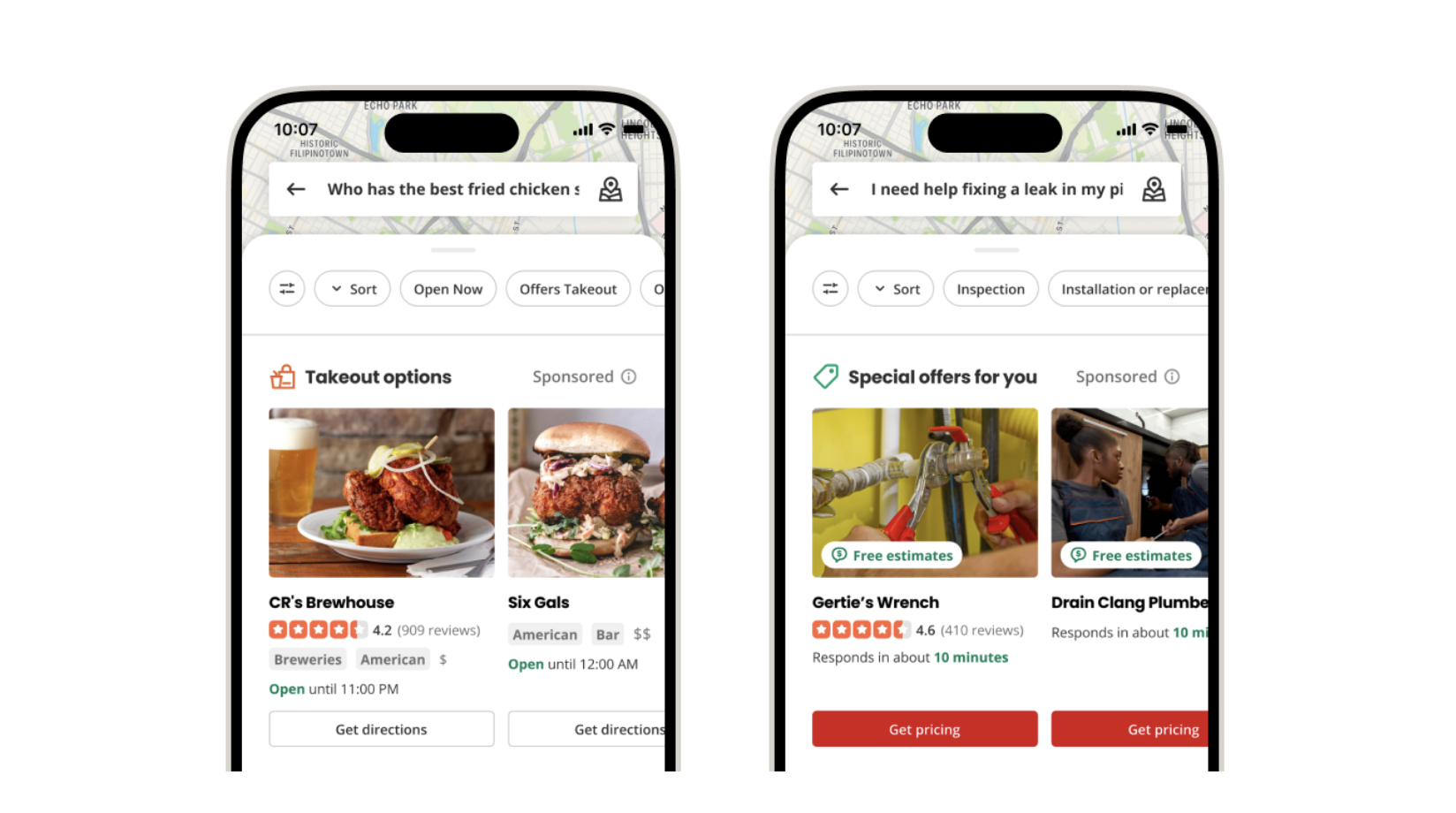
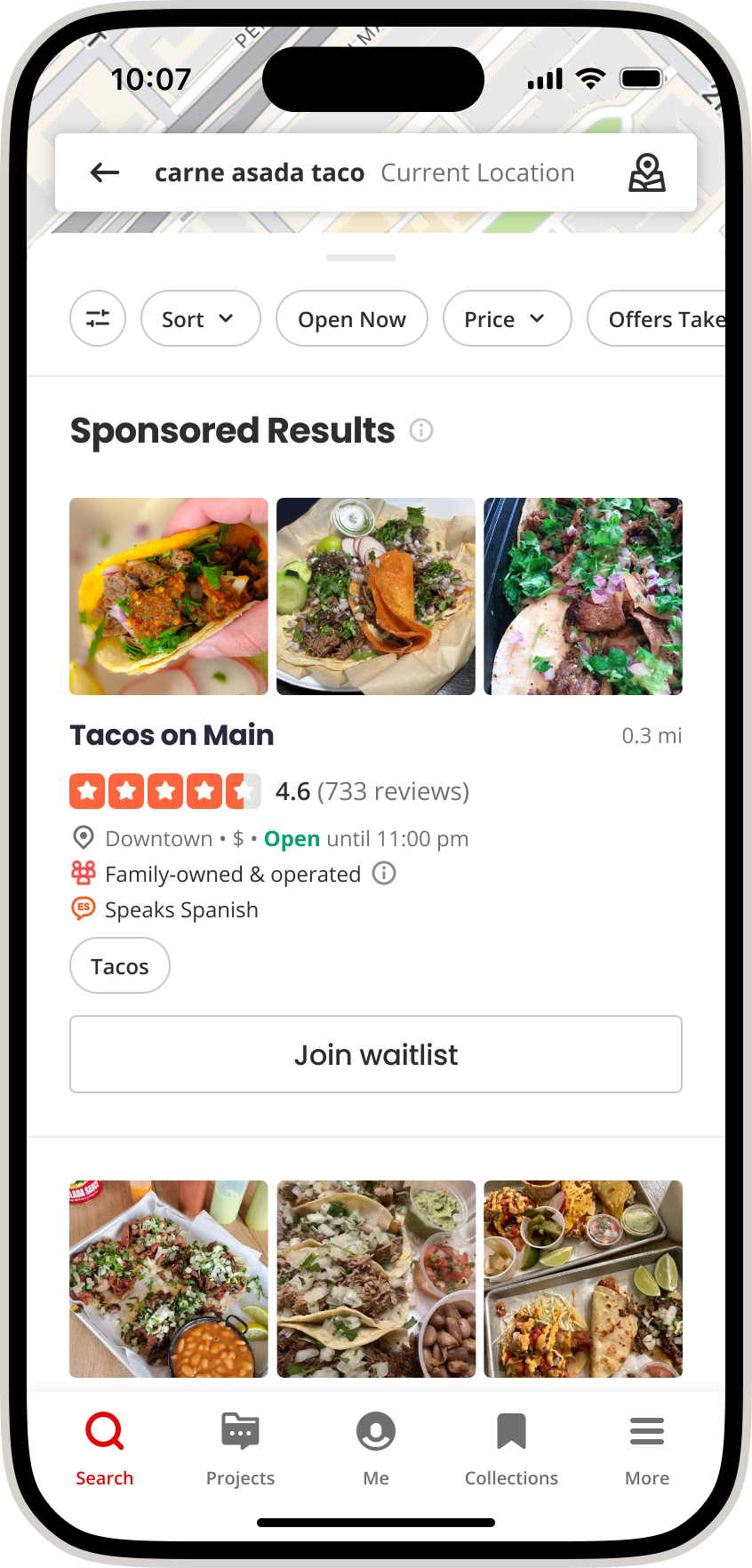
Redesigning Yelp’s ad system from legacy banners to contextual carousels grouped by intent—balancing aggressive monetization with user trust.
Interactive Presentation
Yelp
Ads on Yelp
By Mendy S
Sponsored Results & Promoted Carousels
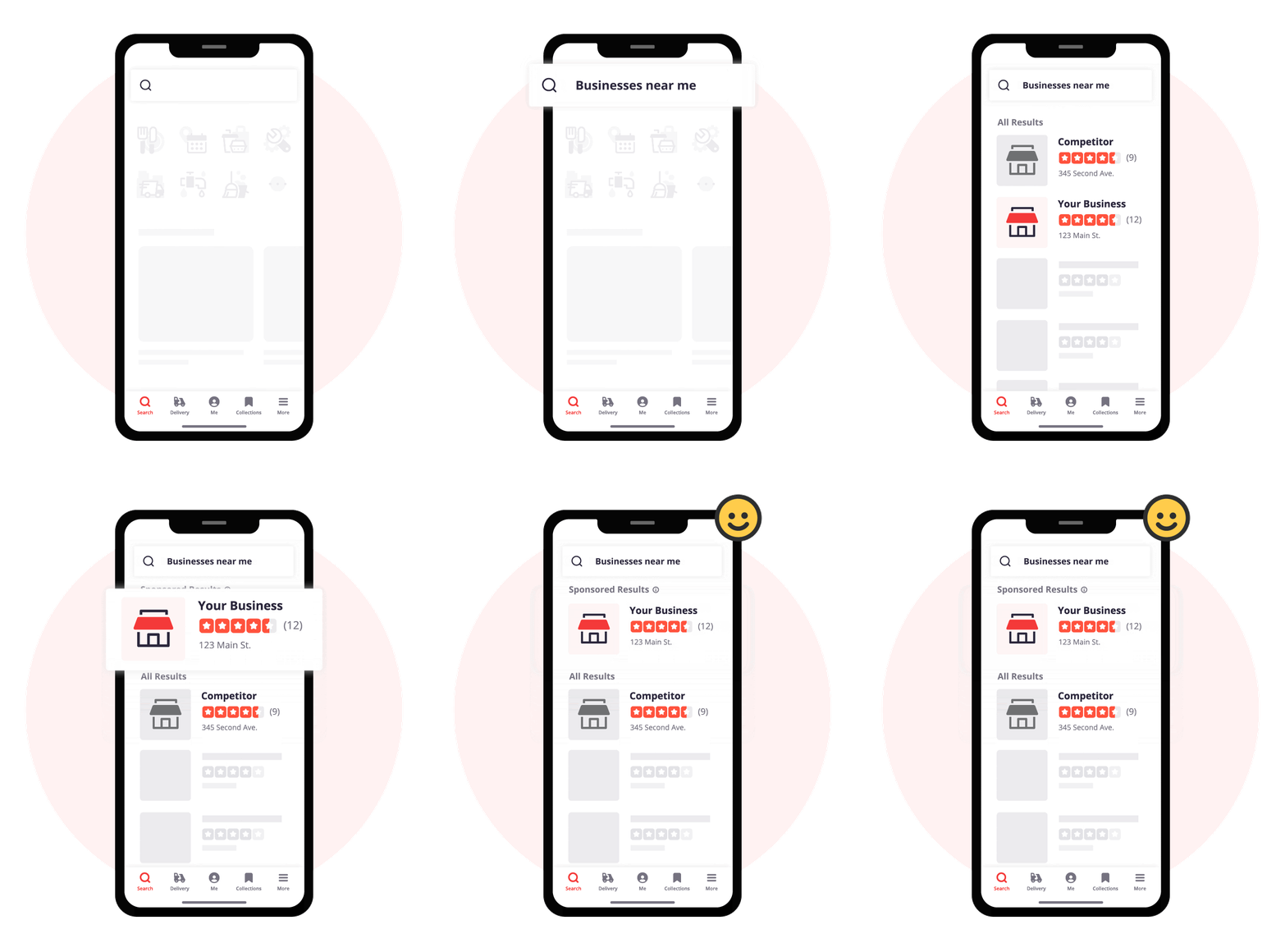
As Lead Product Designer, I spearheaded the redesign of Yelp’s core Ads and Sponsored Placements. Historically, the system relied on static, heavy-handed banners that created ad blindness and eroded trust.
We reframed top-of-search ads into contextual carousels grouped by intent, a design pattern later mirrored by major competitors like Google.
Role
Lead Product Designer
Responsibilities
- Native sponsored placement design
- Ad transparency & labeling UX
- Advertiser onboarding strategy
- A/B testing & data analysis
The Challenge
Legacy Intrusive Ads System
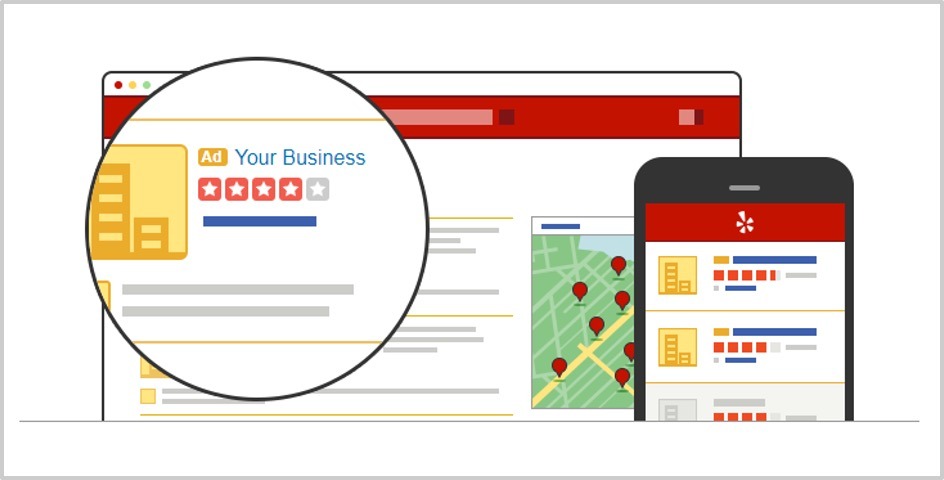
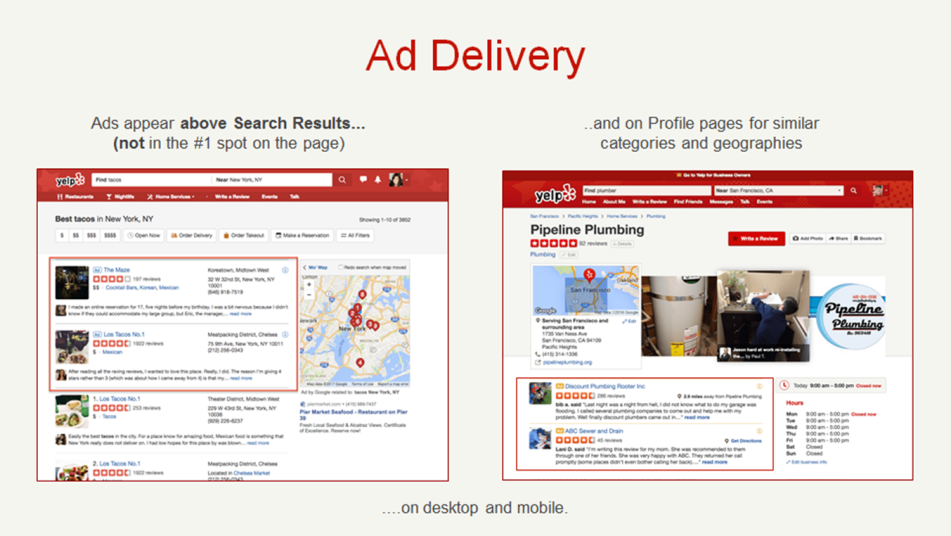
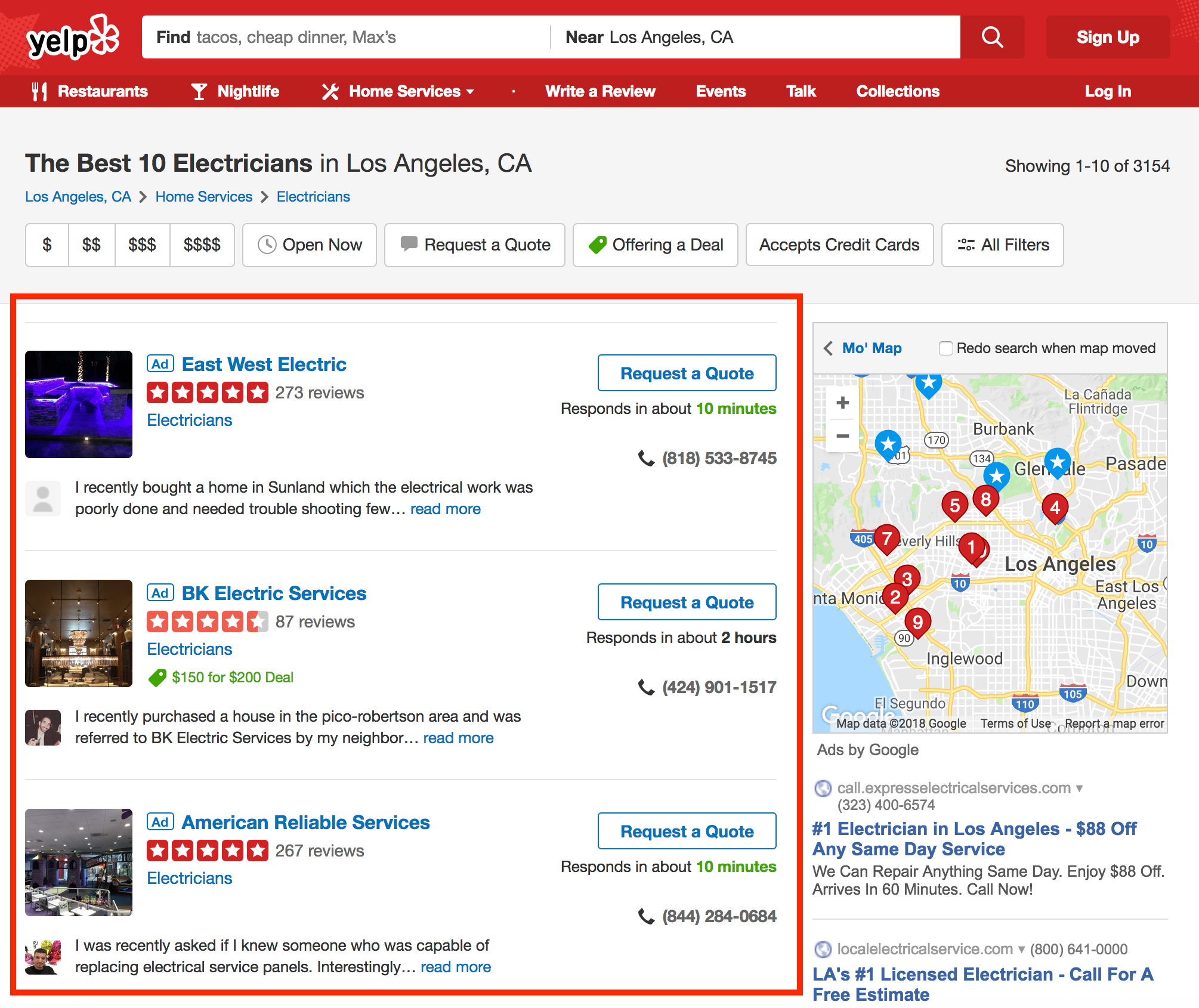
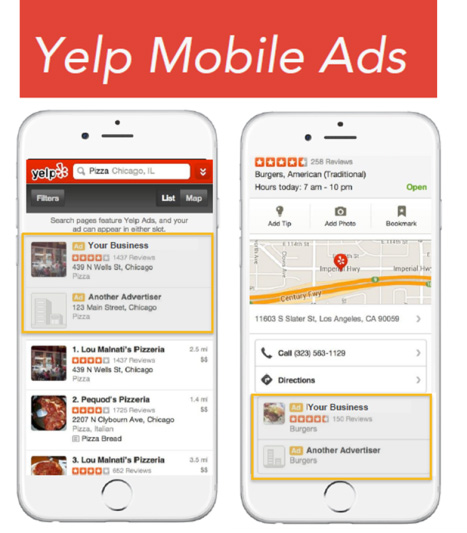
Legacy ad placements pushed organic results far down the page and featured heavy, distracting borders. This disrupted the organic flow of local discovery and created severe ad blindness.
Business Sub-Challenges
Solving for New and Top-Ranked Businesses
We faced two distinct challenges: helping new or low-rated businesses gain visibility to kickstart their presence, and allowing top-ranked organic businesses to highlight specific unique offerings beyond their standard listing.
The Solution
Sponsored Carousels & Paid Attributes
We introduced Sponsored Carousels and Paid Business Attributes. This allowed businesses to pay to highlight specific offerings—like "Verified Deals"—directly within the organic flow in a native, transparent way.
“By grouping sponsored results by user intent, we drove a 21% advertising revenue increase while respecting user intelligence.”